Case study

End-to-End Lifecycle Automation with IBM ELM

We partnered with a major Saudi Arabian social insurance institution to modernize their software development processes. By implementing the IBM Engineering Lifecycle Management (ELM) suite, we successfully automated their workflows, providing the organization with enhanced visibility and granular control across every phase of the development lifecycle

Implementation Phases & Tools

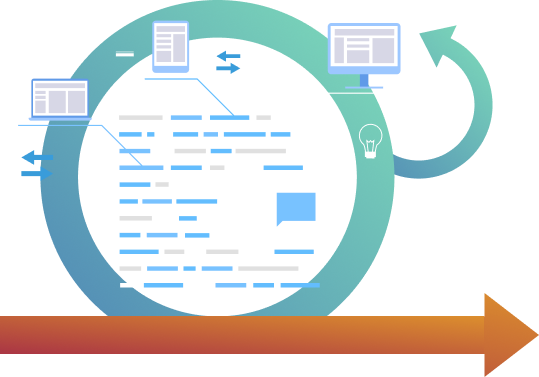
The implementation automated the journey from requirement gathering to final deployment using the IBM Jazz platform:

Add Your Heading Text Here

Utilized IBM Rational DOORS Next Generation to capture and trace business requirements.

Project Planning & Tracking:

Integrated IBM Rational Team Concert (RTC) to manage work items, source control, and build automation.

Quality Management:

Employed IBM Rational Quality Manager for test planning and execution, ensuring requirements were validated through every stage.

Requirement Management:

Leveraged IBM UrbanCode or integrated RTC build features to automate continuous deployment (CD) pipelines.

Key Results

Reduced Time-to-Market: 

Similar implementations have seen a 40% decrease in development time for new services.

End-to-End Traceability:

A “digital thread” connects requirements directly to code and test results, improving audit readiness.

Productivity Gains: 

Automation of mundane tasks (like manual reporting) allowed developers to focus on high-value innovation.

Team Training Program

To ensure successful adoption, the following role-based training sessions were provided:

Role

Training Focus

Key Tools

Requirements Analysts

Elicitation, impact analysis, and traceability matrix creation.

IBM Rational DOORS Next

Developers

Source control, work item management, and build automation.

IBM Rational Team Concert (RTC)

QA/Test Teams

Test case design, manual/automated execution, and defect tracking.

IBM Rational Quality Manager

Project Managers

Dashboard creation, progress reporting, and resource planning.

Jazz Team Server Dashboards

Training Methodology

We utilized a “THINK” approach, combining web-based training modules with hands-on workshops to exceed typical learning hour benchmarks.